Showing posts with label Genetics. Show all posts

10 October 2017

Ignorance clarified on a single blow

OK, so I am doing this course of blender 3D modelling and animation on Udemy (by the way the course is being great in case you're interested). so far so good. I was taking a break, and was thinking to myself "this Udemy thing is a very good idea, I'm quite sure that they take like a 1-5% cut of the money paid for the course and everyone wins", and then my mind wandered to the realm of "would there be good genetics courses in here or maybe even something much more advanced like next generation sequencing data?" (which is what I do for a living, see where I was going?). So far so good again. So I type the word Genetics in the search box and only three results appear, and I think "maybe I should try and set up a basic genetics course or an advance NGS data processing course here" and while I think that, I notice how my brain was imploding, without knowing why yet. The signals from the screen in front of me were caught first through my optical nerve, and as they made it through the mesh of neurons, they were all dying in agony, until the doomed message reached my cortex. Screen capture below.


So, see something weird? out of the ordinary? no? leave me give you a hand.


All these years of research culminating in the CRISPR/cas9 and other genetic editing tools, which will probably be awarded the medicine Nobel prize a year or two from now. And now we learn that you could do that in a gym. Probably complementing it with dog's food and dying at 40 if I have to pay attention to the photo. Millions wasted in Science.

Why does this make me want to cry? inculturation, illiteracy, ignorance, all clarified in a single blow. Every time they say on the news things like "the people that have this gene or this other gene die younger or whatever". FOR FUCK'S SAKE, we all have the same genes, there are no humans that have genes that others don't, and those who do (have more or less genes) usually are never born or they die horribly soon after. Or like this guy up here, which I am sure that all the ladies love: your genetics don't change on your lifespan, unless it is to get cancer. I don't know maybe you are talking about that...

So we are clear, there is an almost exact copy of your genome in each of your cells (and by almost exact I mean 99.9999999% of the 3,000,000,000+ nucleotides in your genome are the same in each one of your 37.2 trillion cells) with very few exceptions (like some very specialised cells of the immune system; or erythrocytes, which don't have a nucleus) and none of them have anything to do with muscle, not by far. And if some bright mind wants to even mention chimerism, just don't. That does not happen while lifting.

So, if you don't know shit about something, please, I beg you, just don't stain terms you do not understand, or even better, worry to understand them before using them. Get to know what's a light year (no, it's not time measure, it's distance, get over it), a quasar, a lymphocyte, a gene, a spleen or whatever it is the thing you want to mention because you think it sounds cool and it will make you sound more clever.

Meanwhile, I'll be crying. Every time someone says something like "redefine your genetics" on a "build muscle" course on Udemy (WTF, by the way, and I am not even going to go into this) please, remember that Justin Beaver kills a cute kitten. or a pup.


25 May 2017

On Happiness

From this geneticist point of view, all human’s minds (and all living beings) have three layers, from bottom to top: Primal, Social and Learned; and each one is based on the one before.

The Primal layer is encoded in the genes (and thus, each one of us is different from all the others, Primal is stronger is some individuals and weaker in others when it comes to behaviour), and it represents the most basic instincts inherent to a species, like the survival instinct, the search for nourishment and the urge to mate and reproduce to inherit your genes. Primal has been selected over millions of years across millions of species, these instincts started to evolve from the LUCA, and are inherent to all living beings to a great extent and very difficult or almost impossible to override.

The Social layer is encoded through epigenetics, and is specific to species and even groups within the species when these are widely spread (like humans). These changes evolve much faster than hardcoded genetic mutations, and they are the basis for the adaptation to rapidly changing environments. Fear, love, hate, predominant aesthetic, and a wide range of what are considered mental disorders fall in this layer. These are more easily overridden than the Primal layer, which can be achieved in several ways, the most obvious, when they enter in conflict with a Primal, the Primal usually wins; but also they can be overridden by drugs or force of will for example.

The Learned layer is not encoded in the genome, neither in the genetics or the epigenetics of the individuals. What’s contained in this layer is passed from generation to generation through a combination of memes together with personal experience. Knowledge, science, religion, art, morals, fashion and many other human constructs fall in this layer. As you can imagine this layer is easily overridden and/or influenced by the Primal and Social layers.


These three layers are very abstract concepts, and, thus, very difficult to measure directly, hence, enter proxies. Proxies are widely used as easy measures of a thing that can tell us something about the measure of another thing which is much more difficult to measure. For example, when a human presents mongoloid factions, that is considered to be a proxy for a trisomy of chromosome 21, and, thus, Down syndrome. Not every human with mongoloid factions has a trisomy of chromosome 21, and more in general, no proxy correlates perfectly with its target trait, whether it is Primal, Social or Learned; but they work very nicely to predict things which would be very hard or impossible to predict otherwise if you find the right proxy.

It is also important to consider that this is not about how many things are contained in each layer (and that is also important, but a different discussion), but about how much of each layer is in each decision that we make in our life. There are very few things in the Primal layer, and tons and tons of them in the Learned layer (in humans, or some of them anyway), but in you, the Primal layer can be the one making the decisions over the others. If the hardcoded genetics variants you carry make you more Primal, and since Primal is most difficult layer to override by our conscious self, your decision making will be mostly Primal, and in which sense specifically will also be hardcoded in your genes. If the hardcoded genetic variants you carry makes you less Primal, but your epigenetics directs you to some aspects of Social more strongly, then the Social layer will be predominant on your decision making. If both your genetics and your epigenetics are not particularly strong towards one thing or another, then your decision making will be mostly influenced by your Learned layer, i.e. by the memes inherited from your parents, family and friends and by your personal experience; or the pool of all the knowledge your mind has acquired during your life up until the point you make that decision.

The brain is an architectural construct product of millions of years of evolution over the genetics and epigenetics of the species. The circuits of neurons within our brains encode all the information that is us, our mind; and these circuits belong into one or more areas of the brain that are in charge of different aspects of the mind, e.g. spacial perception, abstract thinking, self-awareness, memory, etc. How these circuits are and can be made and connected are first determined by our genetics, and most of it occurs during pregnancy (the foundation part if you will). What is not determined by genetics during pregnancy is determined by epigenetics (and this part can get really complicated, since we do not express our epigenetic alleles, but our parent’s). Then we are born, and the most basic things have been already set by our genetic variants (things can change during puberty, for although our genetic sequence does not change over life, the gene expression levels can, and some of these changes are genetically encoded, and puberty is a messy thing from a genetic and hormonal point of view), but epigenetics keep changing through our life depending on the environment, and also, we start learning things, and thus, building the Learned layer, which, usually, gets bigger and bigger as you live.

Taking all this together, each individual will be the mix of its three layers. One particularly impulsive individual in all matters maybe will be 60% Primal, 30% Social and 10% Learned for example (he or she could have tons of knowledge, but not used in decision making), while a person considered as very tempered could be 10% Primal, 30% Social and 60% Learned. How could we determine this? As we spoke before, proxies. So, which are good proxies for the strength of each layer? In my opinion there can be many, and a mean of plenty for each layer would be more adequate, but to keep things simple, and again, in my (educated) experience:

  • Number of wisdom teeth for the Primal layer. Most common number in humans is four, and in my opinion this is fairly primal (yes, most humans are reasonably primal, hence, the irrationality in the world). If you have six like me, you are totally screwed, but the good side of it is that people around you usually know how you feel, since you are very obvious and a fucking bad liar. One day, probably some 5,000 years from now, if we haven’t killed ourselves, hopefully the most common number of wisdom teeth in humans will be two, and the world will be a better place.
  • Number of people you consider your friends (they also need to consider you their friend) for the Social layer. No, Facebook friends do not count. Tweeter followers do not count. Only people that you would put your life in their hands.
  • Number of full (cover to cover) books you have read in your life for the Learned layer. In here there can be a lot of debate, as this is the most complex layer, but in my humble opinion things like twilight and fifty shades of grey do not count.
So now sum your wisdom teeth, your friends and the number of books divided by 12 (universal constant to normalize books that I just made up) and that’s your total (let’s call it N). Your Primal percentage is wisdom teeth/N, your Social percentage is your number of friends/N and your learned percentage is (number of books/12)/N. How are you? Do you agree? In my case it looks like….


Logically, you are born completely primal (no books, no friends, all teeth). According to this proposition, if you want to be less Primal, start reading more books and making more friends, motherfucker. On the other hand, if you want to be more primal, stop reading books and by all means tell everyone around you to go fuck themselves.

So, finally, happiness. What is happiness?. That elusive thing that all of us seek, none understand and few attain for more than some hours in a whole life. In my opinion, happiness is agreement, the agreement of the Primal, the Social and the Learned layer. Achieving this agreement in some banal decision like whether to cut your hair or leave it long will give you some 0.00000000000000000000000001 miliseconds of happiness (keep summing, champion!). Achieving this agreement when making the most important decision in your life could give you a whole year of happiness, but I don’t think that any human yet has been able to do this. Plus, if all the parts of your mind work at unison you become invincible, everyone knows that, while if they disagree, you, as a conscious being, is full of doubt, and doubt only leads to failure.

But then again, all is determined by the universe and written already in the universal equation, so why bother? Just do whatever it is you’re going to do.

17 January 2017

Random Genome Facts

So, the human genome. Property of our species as a whole and each one his or her own individually. twenty-three pairs of macromolecules (chromosomes) made of smaller covalently attached molecules (nucleotides) in the nucleus of most of your cells; that, when unraveled (it is very well packed) is about three meters long. In an average human body there are almost 4 trillion cells, and a very conservative reasoning would be that around 3/4 of them have nuclei (and thus, DNA), so in your body you are carrying some twelve billion kilometers of DNA (among other things), which is enough to go to the sun and back. EIGHTY times.


Nucleotides, as I said, are the basic building block of DNA, or letters, and our genome is a three billion letters long book that tell our biological story at many levels (and you have around six trillion almost prefect copies of that in you). But books need structure, don't they? well, sort of. these letters make sentences (or genes, counting some 20,000 of those), which are (obviously) made of words and spaces (exons and introns). An average sentence (gene) has eight words (exons), and that makes your book around 160,000 words long (Tolkien's Silmarillion is 130,000 words strong for comparison).

You think those are not too many words? think of this. In an actual book, words are in an specific order forming sentences, paragraphs and chapters which would not make any sense of you scramble the order of the words. In the genome this happens all the time though, there are words (exons) that can be removed or added and modify the meaning of the sentence while making sense in the context of the story. Also, the sentences (genes) are not arranged linearly, but are scattered throughout the book, and you have to know in which order you can read them to make chapters (biological pathways) for the story to make sense. Plenty of those sentences (genes) can be found in different chapters, making perfect sense as they are in two or more places, or maybe just removing or adding a word. FYI, each variation of a sentence (gene) caused by the removal or addition of one word (exon) is called isoform (no equivalency here with literature, that I know of).

So we all have all these three billion nucleotides (or letters) in our genome, then what makes each of us a special snowflake? Genetic variation, as a very simplified explanation, the letter in each of those position (and there are four possible letters: A, T, C and G) can change for different reasons, and that is called a mutation. even though all of the three billion letters can change, only some of them (80 million) have been described to actually change in human beings.

And this takes us to the last curiosity about the genome, or how many different possible people there can be due to genetic variability (or in other words, due to the specific set of mutations that we carry in our genomes; and, yes, we are all mutants, no matter what the x-men comics would have us believe, the thing is each of us are mutants for a different set of changes, which is unique to us). Some big numbers first: there are 10 to the 120 (or 10,000,000,000,000,000,000,000,000,000,000,000,000,000,000,000,000,000,000,000,000000,000,000,000,000,000,000,000,000,000000,000,000,000,000,000,000,000,000,000) possible ways in which a chess match can go down; there are 7.5 multiplied by ten to the 18 grains of sand on planet earth  (or 7,500,000,000,000,000,000); there are 100 billion galaxies and 300 billion stars on average on each one of those (not that much of a deal) and around 10 to the 90 atoms in the universe.

Prepare for this.

The combinatory of 80,000,000 (the total number of potential letters that can change, mutate, in our genome) is 2 to the 80,000,000, which is far FAR greater than 10 to the 1,000 (remember there are 10 to the 90 atoms in the universe). 2 to the 80,000,000 possible humans thanks to our genetic code. And that is not taking into account other sources of variation, like CNVs (copy number variation) or structural variation (like the loss of a whole part of a chromosome of the very famous trisomy  of chromosome 21). Think of how unique you are.

Or as Richard Dawkins puts it:

“We are going to die, and that makes us the lucky ones. Most people are never going to die because they are never going to be born. The potential people who could have been here in my place but who will in fact never see the light of day outnumber the sand grains of Arabia. Certainly those unborn ghosts include greater poets than Keats, scientists greater than Newton. We know this because the set of possible people allowed by our DNA so massively exceeds the set of actual people. In the teeth of these stupefying odds it is you and I, in our ordinariness, that are here.We privileged few, who won the lottery of birth against all odds, how dare we whine at our inevitable return to that prior state from which the vast majority have never stirred?”

Have a nice day snowflake.


23 April 2015

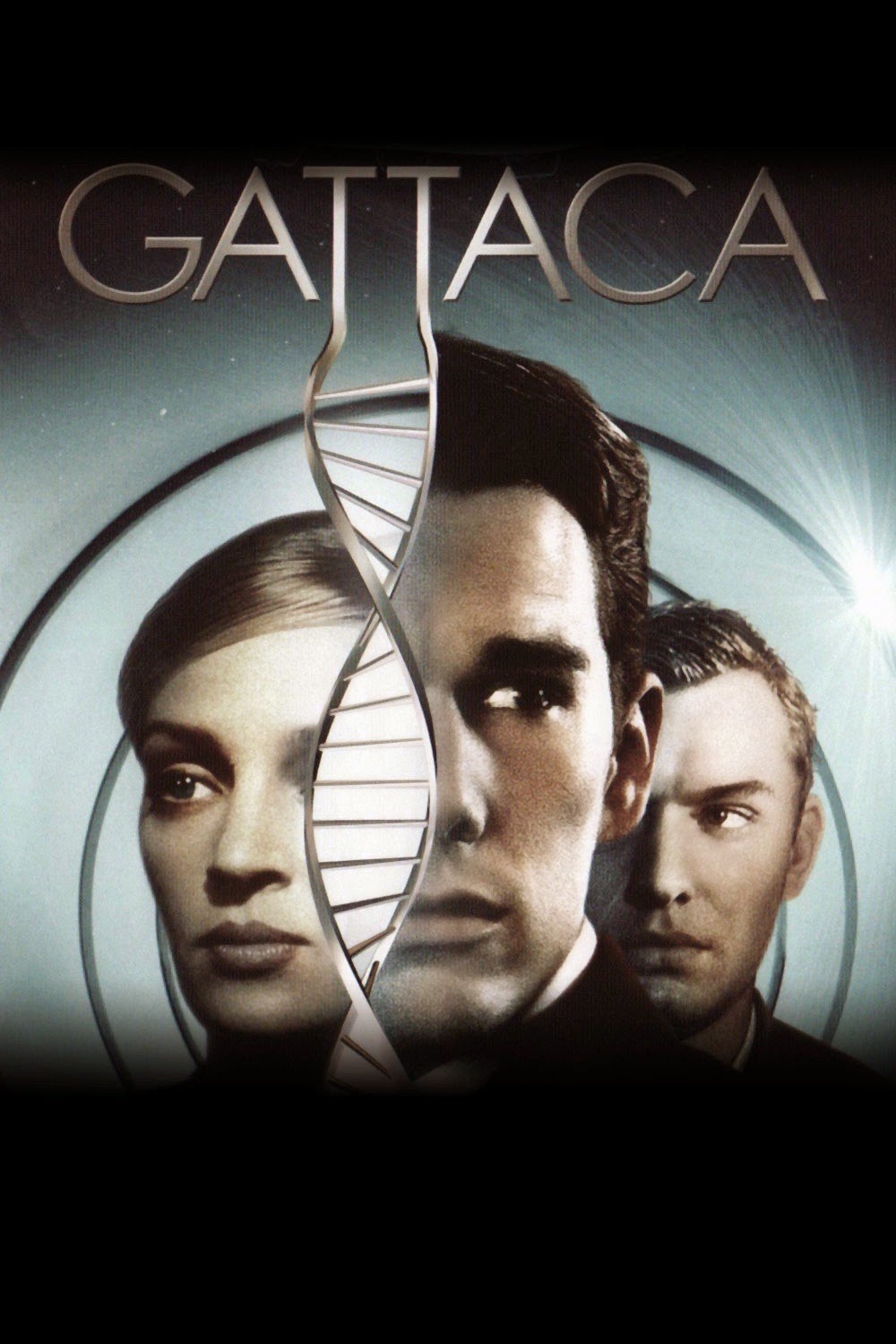
GATTACA

And I say GATTACA, not Gattaca, for when writing a DNA sequence you do not capitalize as if it was the name of someone, all letters go either upper or lower case. Or maybe TGTAATC in the complementary strand of DNA. Who knows, since this sequence happens hundreds of thousands of times in a single human genome. And to be clear, it does not have a specific function that we know of.


But speaking about the movie GATTACA, we are one step closer to stop being just random humans (meaning genetically random humans whose genetics have been selected across countless rounds of random mutation and natural selection, from long before we were humans, to a time were our many-great grandfathers were tiny bacteria). Some Chinese scientists have made the first modification using the CRISPR/cas9 method in (non-viable polyploid) human embryos.


The cautionary tale in their publication is that we still have to overcome many technical difficulties, but it will be doable in the near future. Applications besides Hollywood making movies? editing the genome of an embryo so it will not have some (or all) genetic diseases, and making kids look more like Scarlett or Brad according to the parents wishes (and budget).

Ethical implications? you name them. There is a current of scientists that pose we should not go down that path (and for several good reasons, as detailed in the article), but still we will do it. Why? Because when we CAN do something, we do it. It is that simple for humans. For anything imaginable (and I mean anything), if (or when) it becomes doable, you'll always find some human clever/stupid/brave/committed/maniac enough to do it. There's is no stopping this kind of things.

So people better stop saying "do not do it" and start regulating it, and preparing for the outcomes. After all, every single new discovery in the history of humanity can be used for good or for bad. Hence, just enforce the proper environment (laws, conscience, education) to avoid as largely as possible the bad outcome of it.

But then again, what is good and what is bad?